The Dreamcast failed because of a combination of factors that arrived at once: Sega’s reputation was already damaged by the Saturn’s rocky run, Sony’s PlayStation 2 announcement froze the market before it launched, weak disc security invited rampant piracy, and Sega lacked the financial staying power to outlast a costly console war.
§01Was the Dreamcast actually a bad console?
No — most retrospective opinion, including ours, treats the Dreamcast as one of the more technically well-regarded consoles of its era. Its failure was not really a hardware problem. It was a business and timing problem layered on top of a company that had already burned a lot of trust with retailers, players, and its own parent corporation.
The console offered a smooth jump into 3D-era gaming, had online capability built in at a time when that was still unusual for a home console, and attracted a genuinely strong opening lineup. None of that was enough to fix what was happening around it.
§02How much did the Saturn’s failure hurt the Dreamcast before it even launched?
A great deal. The Sega Saturn had underperformed against the original PlayStation, and its confusing surprise launch in some regions had frustrated retailers and third-party publishers alike. By the time the Dreamcast arrived, Sega was trying to win back trust it had already spent.
- Retailers were more cautious about shelf space and marketing commitments after the Saturn era.
- Third-party publishers were wary of investing heavily in a Sega platform again.
- Sega’s own financial position had weakened, leaving less room to absorb a slow start.
This meant the Dreamcast needed a close-to-perfect launch and years of sustained momentum to change perceptions. Instead, it got a promising first stretch followed by mounting pressure almost immediately.
§03Did the PlayStation 2 kill the Dreamcast?
The PlayStation 2’s presence in the market was one of the biggest single factors, but it is more accurate to say its announcement, rather than its eventual release, did the damage. Once Sony signaled a next-generation machine was coming with strong backward compatibility and DVD playback, shoppers and publishers began waiting for it.
This is a pattern that has repeated in the industry more broadly — a rumored or announced future console can freeze sales of a current one long before the new machine actually ships. Publishers redirected resources toward the platform they expected to dominate the next several years, and many players who might have bought a Dreamcast chose to wait instead.
Readers interested in how console generations overlap and replace one another can find more context in our explainer on console generation versus console refresh distinctions, which covers why timing a purchase around a transition period is so tricky.
§04Why did disc piracy hurt Sega so badly?
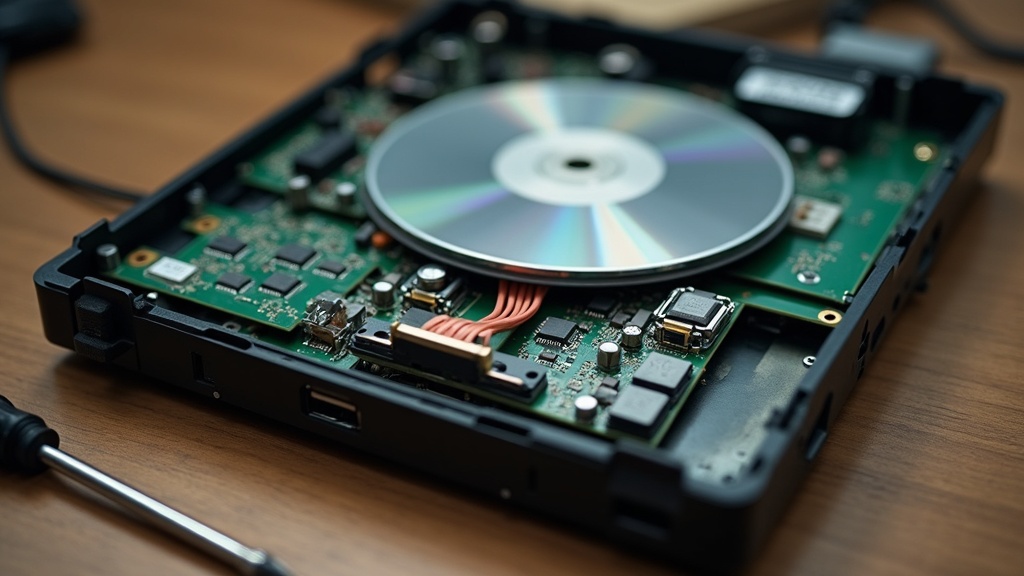
The Dreamcast used a proprietary disc format, but its copy protection turned out to be comparatively easy to defeat, and unauthorized copies of games circulated widely well before the platform’s later years. That undercut software revenue at exactly the moment Sega needed hit games to keep selling at full strength.
Consoles at this stage of the industry typically sold at a loss or thin margin on the hardware itself, with the real profit coming from game sales and licensing fees on every disc sold by publishers. When a meaningful share of the games being played were not legitimately purchased, that model breaks down quickly. We are not going to detail how that piracy was carried out — historically, it is well documented that it happened, and it is one of the more frequently cited practical reasons publishers grew nervous about supporting the platform long-term.
For readers curious about how the industry has since handled disc-based ownership and protection more broadly, our piece on what the shift from cartridges to discs actually changed covers the tradeoffs that came with moving off cartridge media in the first place.
§05Did Sega spend itself into trouble trying to compete?
Yes, and this is one of the less-discussed but genuinely important reasons. Sega priced the Dreamcast aggressively and later cut its price further to stay competitive, which meant the hardware was sold at a loss for a meaningful stretch of its life. That strategy can work if a company has deep enough reserves, or a parent large enough to absorb the losses, to outlast the pressure until software sales and price reductions on components make the hardware profitable.
Sega did not have that cushion. The company was already carrying financial strain from the Saturn era, and pouring more capital into subsidizing Dreamcast hardware and marketing against a much larger, better-funded rival left it with very little room for a prolonged fight. When a company the size of Sony can afford to wait out a competitor, being first to market stops being an advantage on its own.
§06Did third-party publisher support actually collapse?
Support weakened rather than vanished outright, but the trend was clearly negative. Several major publishers scaled back planned Dreamcast releases or shifted announced projects to other platforms as it became clear the console’s install base and long-term prospects were uncertain.
- Publishers had limited development budgets and had to bet on where players were actually going to be in a year or two.
- Sega’s own financial uncertainty made some publishers wary of investing in exclusive or timed content.
- Retail commitment softened as the PlayStation 2 dominated pre-release attention and shelf planning.
Without a steady stream of third-party blockbusters to sit alongside Sega’s own studio output, the software library gradually looked thinner compared to what was coming on competing platforms.
§07Was the Dreamcast ahead of its time with online play?
In some ways, yes. The Dreamcast shipped with built-in online capability at a point when home console internet features were still a novelty rather than an expectation, and a handful of its games leaned into that. This was genuinely forward-looking for a mainstream console of that era.
But being early is not the same as being positioned to benefit. Home internet adoption and speeds were still limiting factors for a lot of households, and the broader industry infrastructure — friend lists, matchmaking, persistent accounts — that we now take for granted took years longer to mature. Our history piece on how online multiplayer became normal goes into how gradual that shift actually was, and why an early mover does not always get the reward for arriving first.
§08Could Sega have saved the Dreamcast with a different strategy?
It is genuinely debated among longtime players and historians, and there is no single clean answer. Some arguments point to pricing decisions, some to marketing choices, and some argue the underlying financial position made the outcome close to inevitable regardless of individual decisions.
What is less debatable is that Sega ultimately chose to exit the home console hardware business entirely after the Dreamcast, becoming a third-party publisher instead — a decision that reshaped the company for the following console generations and is still how most players know Sega today.
§09What did the Dreamcast’s failure change for the industry?
It narrowed the home console market to a smaller set of competitors for years afterward and reinforced how much financial staying power matters in a console war, not just launch-day critical reception. It also left the Dreamcast as one of the more fondly remembered “what if” platforms in gaming history.
For collectors and retro players today, the console’s relatively short official life has made original hardware and complete-in-box games a notable area of interest. If you’re considering picking one up secondhand, our guides on what to check before buying a used console and how to spot a fake or counterfeit retro game are useful starting points before spending money on aging hardware. Anyone building out a broader retro shelf might also find our Retro & Preservation hub and the Game History archive worth browsing for related context on how other consoles of the era fared.
§10The short version
The Dreamcast did not fail because it was a poor piece of hardware or because players rejected it outright. It failed because Sega entered the generation with a damaged reputation and thin financial reserves, faced a competitor that could afford to wait it out, and lost software revenue to piracy at the worst possible moment. Any one of those problems might have been survivable. Together, they were not.