The shift from cartridges to discs mainly changed three things: how much data a game could hold, how long it took to actually start playing, and how cheap it was to manufacture and pirate. Discs made bigger, more cinematic games possible, but they traded near-instant loading for waiting screens and made games far easier to copy.
§01Why did discs replace cartridges in the first place?
Discs replaced cartridges because they were dramatically cheaper to manufacture in bulk and could hold far more data. A cartridge is a circuit board with memory chips soldered onto it; pressing a CD or DVD is closer to stamping a shape into plastic, which scales down in cost much faster as volume increases.
Publishers were also chasing storage space. As games grew ambitious in the mid-to-late 1990s — full-motion video, voice acting, orchestral soundtracks, longer worlds — cartridge memory chips became a real bottleneck. Discs offered a way out without redesigning the chip itself for every game. This transition happened alongside the broader move covered in why games moved from 2D to 3D so quickly, since bigger 3D worlds and pre-rendered scenes were exactly the kind of content that needed the extra room.
§02What actually got better with discs?
Discs unlocked more storage space per game, which meant longer campaigns, recorded music and voice acting, and pre-rendered cutscenes that cartridges simply could not fit. They were also much cheaper to produce, which helped keep game prices from climbing as games got more ambitious.
- Storage capacity: A single disc could hold vastly more data than the memory chips inside a typical cartridge of the same era, opening the door to longer games and richer audio.
- Manufacturing cost: Pressing discs was cheaper at scale than fabricating cartridge circuit boards, which mattered to publishers deciding how big and how expensive a game could be.
- Audio quality: CD-quality soundtracks and spoken dialogue became normal rather than a luxury, since cartridges often had to compress or synthesize sound to save space.
- Full-motion video: Pre-rendered cinematic sequences became a standard feature of big releases in a way that was impractical on cartridge hardware.
§03What got worse with discs?
The biggest downside was loading time. Cartridges could be read from almost instantly because the data sat on chips wired directly into the system, while discs required a laser to physically locate and spin up data, introducing waiting screens that hadn’t really existed before.
Durability also took a step back. Cartridges could survive drops, dust and rough handling reasonably well. Discs scratch, and a scratched disc can become unreadable in specific spots, causing freezing or crashing during exactly the section that got damaged. Cartridges rarely failed that way; their common failure mode was dirty contacts, which usually just needed a clean rather than a replacement.
Load times became such a defining frustration of the disc era that later hardware generations made eliminating them a headline feature. That story continues into the present with solid-state storage, which is covered in more detail in what an SSD actually changes about game loading.
§04Did discs make piracy easier?
Yes, discs made unauthorized copying significantly easier than cartridges did. A cartridge required specialized, expensive equipment to dump and reproduce, which kept casual copying rare. A disc could be duplicated with consumer equipment that became common in households once CD and DVD burners spread.
This is a genuinely contested part of the history — some point to disc-era piracy as a major commercial headache for publishers, while others argue its real-world impact varied a lot by region and console generation. What’s not contested is that publishers and hardware makers responded with copy protection schemes, region locks and authentication checks, an arms race that shaped console design decisions for years afterward. It’s a topic worth approaching carefully, and this site does not explain how any of those protections were bypassed; the emphasis here is on what changed for ordinary buyers.
§05Did discs change how much games cost to buy?
Not dramatically, at least not right away. Manufacturing a disc was cheaper than manufacturing a cartridge, but retail prices were driven far more by development budgets, marketing and what the market would bear than by the cost of the physical medium itself.
Where the cost difference mattered more was for publishers deciding whether a game was financially viable to make bigger. Cheaper discs meant a publisher could afford to ship more content on the medium without the per-unit cost spiraling the way it could with cartridge memory. Buyers interested in how pricing decisions get made today, including when discounts actually show up, can look at when the real discount periods are in the gaming calendar.
§06Did discs change how consoles were designed?
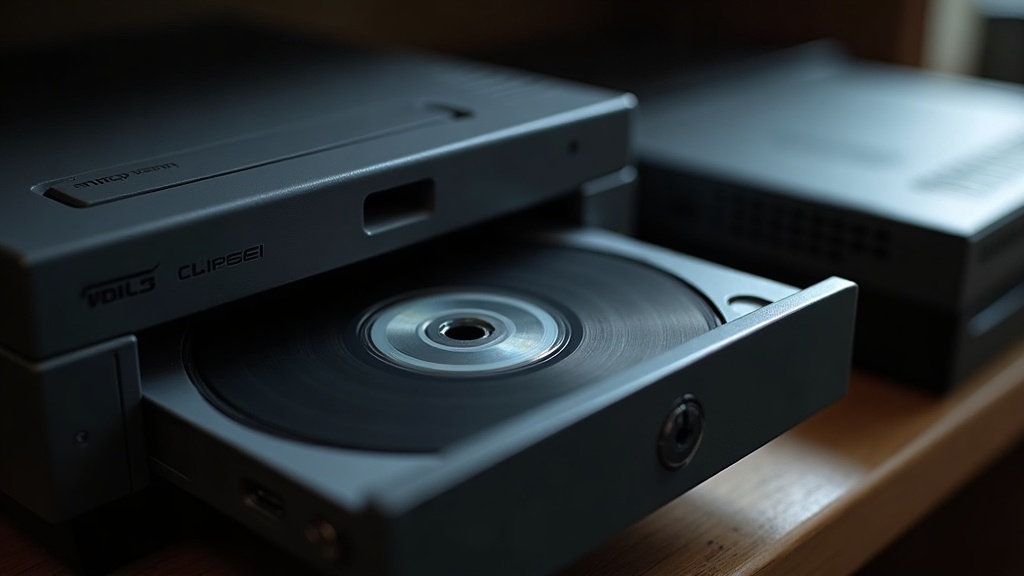
Yes. Cartridge slots were simple and required little beyond contact pins, while disc drives needed a spinning motor, a laser reader and a tray or slot mechanism — all moving parts that could wear out, get dusty, or need recalibration over years of use.
This added a new category of hardware failure that didn’t really exist in the cartridge era: drives that struggle to read discs after years of spinning, laser assemblies that drift out of alignment, or trays that stop opening cleanly. Anyone shopping secondhand for older disc-based hardware benefits from checking drive health specifically, a point covered in what to check before buying a used console.
Console design also had to account for heat and noise from a spinning drive in a way cartridge hardware rarely did, a thread that connects to modern discussions of what actually happens when a console overheats.
§07Are cartridges actually better for long-term preservation?
In many respects, yes. A well-made cartridge with healthy internal chips can remain readable for decades because there’s no physical disc surface to scratch or degrade through use. Discs, especially cheaply pressed ones or ones with certain dye types, can suffer from disc rot or delamination over long stretches of time.
That said, cartridges aren’t immune to failure — battery-backed save chips can die, and connector corrosion is common. Preservationists generally treat both formats as needing active care rather than assuming either one is a “set it and forget it” storage medium. Readers interested in the specifics of aging cartridges, including how to tell a well-preserved original from a damaged or altered one, can check how to spot a fake or counterfeit retro game cartridge. The broader preservation conversation, including how museums and archivists handle both formats, is covered in the site’s Retro & Preservation section.
§08Does any of this still matter now that most games are digital?
It matters as historical context more than daily practicality, since most current-generation buying decisions now come down to digital downloads versus physical discs rather than discs versus cartridges. But the underlying trade-offs echo forward: bigger storage capacity versus faster access, manufacturing cost versus durability, and openness versus copy protection are still the exact tensions buyers weigh today.
Physical media as a whole — whether cartridge or disc — also still offers things digital licenses don’t always guarantee, like resale value and independence from a storefront staying online. That comparison is explored fully in digital vs physical games: which wins long-term. For anyone building out a broader understanding of how console hardware evolved generation to generation, the Game History archive and the Consoles & Hardware hub both dig further into how these format shifts shaped what modern consoles look like today.
§09The short version
Cartridges were fast and tough but limited and expensive to make at scale. Discs were cheap and roomy but slower to load, more fragile, and easier to copy without authorization. Neither format was simply “better” — each pushed game design and console engineering in a different direction, and those pressures are still visible in how storage, loading and durability are talked about in gaming hardware today.