You spot a fake retro cartridge by checking the screws, the label print quality, the circuit board inside, and how it behaves in a real console. Genuine cartridges from the original manufacturing era used specific screw types, precise label alignment, and internally consistent chips. Reproductions and counterfeits almost always slip up on at least one of these.
§01What makes a retro cartridge counterfeit in the first place?
A counterfeit cartridge is one built to pass as an original release when it isn’t — usually a reproduction board loaded with a copied game and dressed up in packaging or a label designed to look authentic. Sellers do this because original cartridges for popular or rare games command higher prices than a generic reproduction would.
Not every non-original cartridge is meant to deceive. Hobbyists build reproduction carts openly for games that never got an official cartridge release, or to preserve titles that are otherwise hard to access legally. The problem is when a seller passes off that same hardware as a genuine, period-accurate cartridge without disclosing it.
§02How do the screws and shell give away a fake?
Original cartridges from consoles like the NES, SNES, and Genesis were assembled with specific screw types and shell molds that reproductions rarely match exactly. If the screws look like standard hardware-store Phillips heads on a cartridge that should have a distinctive security screw, that is a strong warning sign.
Beyond the screws themselves, look at the shell:
- Check whether the plastic color and texture match other verified originals for that platform — reproduction shells are often molded from generic stock and feel slightly different in weight or finish.
- Look for mold seams in unusual places, or seams that don’t line up the way they do on a known-good cartridge.
- Check the connector edge (the part that slides into the console) for sloppy trimming, rough edges, or a slightly different color of gold plating than an original.
None of these checks are foolproof on their own, which is why it helps to compare against a cartridge you already trust, or clear photos from a source you know is reliable, rather than judging in isolation.
§03What should the label look like on a genuine cartridge?
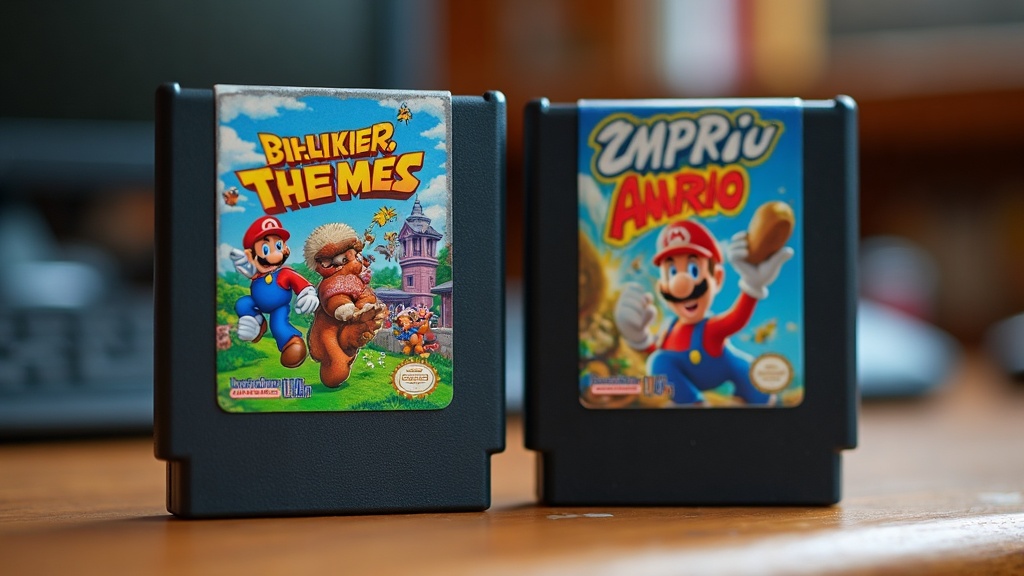
A genuine label should have sharp, evenly printed text, consistent color saturation, and precise alignment within the shell’s label recess. Blurry text, visible print banding, colors that look slightly “off” compared to reference images, or a label that sits crooked are all signs of a reprinted or reproduction label.
A few specific things worth checking:
- Font weight and spacing — official labels used consistent typography; counterfeits sometimes use a close-but-not-identical font.
- Barcode and rating-board logos, where present — these should be crisp, not pixelated or smeared.
- The finish of the label material itself. Some original labels have a specific texture or gloss level that inkjet-printed reproductions don’t replicate well.
- Wear patterns that make sense. A label claiming decades of shelf age but showing suspiciously fresh gloss and zero yellowing is worth a second look.
None of these tells are always visible in listing photos, which is one more reason that buying secondhand physical games in general benefits from a careful pre-purchase checklist — the same kind of scrutiny we recommend in our guide on what to check before buying a used game.
§04What’s inside the cartridge that fakes get wrong?
Inside a genuine cartridge, the circuit board layout, chip markings, and solder work follow patterns consistent with how that game was actually manufactured. Reproduction boards often use modern flash-memory chips, different chip counts, or visibly newer soldering that doesn’t match the era the game claims to be from.
If you’re comfortable opening a cartridge (and willing to accept that doing so can affect resale value), look for:
- Chip markings that look hand-printed, smudged, or inconsistent with known reference photos of that game’s board.
- A single modern-looking flash chip where an original board would have used multiple older-style chips, or vice versa.
- Solder joints that look fresh, shiny, or hand-done on a board that’s supposedly decades old, versus the duller, more uniform factory soldering typical of original production.
- Extra wires, jumpers, or small added components — sometimes called “bodges” — that suggest a board has been modified to run a copied game rather than manufactured to run it natively.
This kind of internal check is the most reliable way to confirm authenticity, but it also requires some comfort with basic electronics and a reference point for comparison, so it’s not something every buyer will want to do before a purchase.
§05Do fake cartridges actually play differently?
Sometimes, yes. Reproduction cartridges can run games with graphical glitches, timing issues, or missing effects if the copy wasn’t dumped and programmed carefully, since older cartridge hardware sometimes relied on specific chips to handle sound or graphics tricks that a generic reproduction board doesn’t replicate.
That said, a well-made reproduction can play close to flawlessly, so smooth gameplay alone isn’t proof that a cartridge is genuine. Treat in-game behavior as one data point among several, not a final verdict.
§06Are reproduction carts the same as counterfeits?
Not necessarily. A reproduction cartridge is hardware built after the original release to play a game, often openly sold as a reproduction. It becomes a counterfeit specifically when it’s sold or labeled as an original, undisclosed. The hardware can be nearly identical — the deception is what defines the fake.
This distinction matters for buyers because plenty of reproduction cartridges exist for entirely legitimate reasons, including preserving games that are otherwise difficult to play on original hardware. The issue for collectors is transparency: a seller should tell you what you’re buying.
§07What about save games and battery-backed carts?
Cartridges that use an internal battery to save game progress are a specific risk area, because counterfeit or heavily aged boards may fail to hold a save at all, or lose it quickly after power is removed. If save-and-reload behavior is unreliable on a cartridge marketed as working, that’s worth investigating further.
It’s also worth remembering that even genuine original cartridges can develop battery issues purely from age, which is a separate problem from counterfeiting. A failing save battery on an authentic cartridge doesn’t make it fake — it just means the hardware needs attention, similar to how any older console component can degrade over time, a topic covered in our piece on how long a game console actually lasts before it fails.
§08Where should you buy retro cartridges to avoid fakes?
The safest sources are sellers with a track record, clear high-resolution photos of the actual item (not stock images), and a return policy that allows for authenticity disputes. Specialist retro game stores and established resellers tend to be more reliable than anonymous online marketplace listings with limited photos.
A few habits reduce risk regardless of where you shop:
- Ask for photos of the cartridge’s screws, label, and connector edge before buying, not just the box.
- Compare listing photos against verified reference images for that specific game and region, since packaging and label design varied by market.
- Be cautious of prices that are unusually low for a game known to be rare or expensive — a bargain price on a hard-to-find cartridge is one of the more reliable red flags.
- Favor listings and stores that explicitly disclose reproduction hardware, since that honesty is itself a good sign about the seller.
These same instincts overlap heavily with buying any secondhand hardware, including the console itself — our guide on what to check before buying a used console covers the hardware side of that equation, and our buying advice hub has broader guidance for secondhand purchases generally.
§09What should you do if you already bought a fake?
Contact the seller or marketplace first, since many platforms have buyer protection for items that aren’t as described, and a clear case with photos of the screws, label, and board is usually enough to support a return or refund request.
If a direct resolution isn’t possible, consider it a lesson for future purchases rather than something worth chasing indefinitely, particularly for lower-value cartridges. For genuinely rare or valuable games, it may be worth consulting a collector community that specializes in that specific console, since experienced collectors often recognize the exact tells for particular games and regions faster than a general checklist can.
Finally, it’s worth stepping back and considering how much of retro gaming you want to keep on physical cartridges versus other ways of experiencing older libraries. The tradeoffs between physical ownership and other formats are explored in our piece on whether buying digital or physical is better in the long run, and for background on how console hardware and cartridge-based generations have shifted over time, our consoles and hardware hub and our explainer on console generation versus console refresh are useful starting points.