Consoles get quieter and cooler over time mainly because the manufacturer shrinks and refines the processor inside. A smaller, more efficient chip made on a newer manufacturing process generates less heat doing the same job, so the fan doesn’t have to spin as hard or as often to keep things safe.
This isn’t a mystery or a conspiracy about early units being deliberately bad. It’s a predictable pattern that has played out across almost every console generation, and understanding it can help with one of the more practical questions in gaming: whether to buy a console the day it launches or wait for a later, calmer version.
§01What actually changes inside a console over its lifespan?
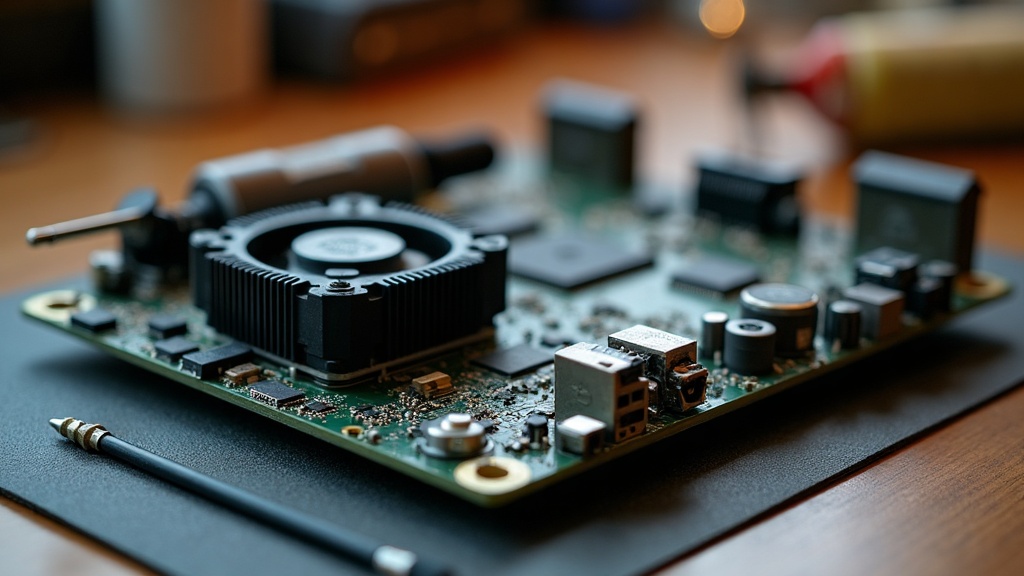
The core change is the manufacturing process used to build the main chip, which typically combines the processor and graphics hardware onto a single piece of silicon. Early production runs use a manufacturing process that is often newer to that specific chip design and less optimized. Later revisions move to a smaller, more mature process that packs the same logic into a physically smaller area.
A smaller chip generally means:
- Less electricity needed to do the same amount of work
- Less heat produced as a byproduct of that work
- More room inside the case for improved cooling, or the option to shrink the case itself
- Fewer manufacturing defects, since smaller, more refined processes tend to have better yields
Manufacturers don’t usually redesign a chip from scratch partway through a console generation. Instead, they take the existing design and re-implement it on a newer fabrication process, sometimes combining previously separate chips into one. Each of these steps tends to lower power draw and heat output without changing what the console can actually do.
§02Why are launch consoles louder and hotter in the first place?
Launch consoles are loud and warm because manufacturers are racing to hit a release window using the most advanced manufacturing process available and affordable at that moment, which is rarely the most efficient version of that process yet. The first units off the line carry a real cooling and noise cost for that timing.
When a new generation is announced, the chip inside is often being built on a manufacturing node that is still relatively new to the entire semiconductor industry, not just to that specific company. Early production on any new node tends to be less consistent — some chips need more voltage than others to run reliably, and higher voltage produces more heat.
To manage that heat within a certain size of box, launch hardware usually leans on:
- A larger fan running at higher speeds
- More metal in the heatsink, adding size and weight
- Conservative internal temperature limits that trigger the fan sooner
All of that adds up to the console people remember from launch day: bigger, heavier, and audibly working during a busy game or in a warm room. Readers deciding between buying immediately or holding off may find it useful to weigh this pattern against the broader trade-offs covered in Buy a Console at Launch or Wait for the Revision?
§03Does a quieter console mean weaker cooling or corners being cut?
No — a quieter later-model console usually needs less cooling effort, not less cooling capability. Because the chip produces less heat to begin with, the same fan can spin slower, or a smaller fan can do the same job, while still keeping internal temperatures in a safe range.
This is a common point of confusion. Some players assume a smaller, quieter revision must be a “cheaped out” version of the original. In most cases it’s closer to the opposite: the manufacturer has had more time to understand how the chip behaves, refine the circuit board layout, and test which components can shrink without affecting reliability.
That said, revisions aren’t automatically better in every respect. Manufacturers sometimes use the redesign to also cut costs in other places — a smaller power supply, fewer physical ports, or a different disc drive mechanism. Whether a specific revision is a straightforward upgrade or a mixed bag is worth checking on a model-by-model basis rather than assuming every later version is strictly superior.
§04Is this the same thing as a console “generation” changing?
No. A quieter, cooler console later in its life is usually the same generation and the same games library, just built on refined internal hardware. A new generation means a genuinely new console with new capabilities, while a refresh or revision is an updated version of an existing one.
These two ideas get mixed up often enough that it’s worth separating clearly:
- Revision: the internal chip is shrunk or re-engineered, the case may get smaller or lighter, cooling improves, but the console plays the exact same games in the exact same way.
- Mid-generation refresh: a more capable version of the same console family is released partway through the generation, sometimes with improved graphics output or storage, aimed at a specific audience like higher-end displays.
- New generation: an entirely new console line, generally not backward-compatible in the same way, built around new hardware from the ground up.
The quiet-and-cool effect discussed in this article mostly applies to the first two categories, especially straightforward revisions. For a closer look at how these categories differ and why the distinction matters when buying, see Console Generation vs. Console Refresh: What’s the Difference?
§05Does a quieter console also mean it will last longer?
Often, yes, in a general sense. Lower operating temperatures put less thermal stress on components over time, which tends to support longevity. But fan noise and heat are only part of what determines how long a console lasts — moving parts like disc drives and repeated power cycling matter too.
Heat is one of the more common stressors on electronics over years of use. Components that run cooler on average are, all else being equal, less likely to suffer from heat-related wear such as thermal paste breaking down or solder joints weakening from repeated heating and cooling cycles.
However, a quieter revision isn’t a guarantee of a longer lifespan on its own. Reliability also depends on:
- How well ventilated the space around the console is during actual use
- Whether dust is allowed to build up inside over months or years
- How often the console is used for demanding, sustained gaming sessions versus lighter use
- The quality of specific components chosen for that revision, which can vary
Readers who want a fuller picture of what actually causes consoles to fail, beyond just heat, may find it useful to read How Long Does a Game Console Actually Last Before It Fails?, which goes into the other common failure points alongside thermal wear.
§06Does this pattern apply to handhelds too?
Yes, handheld consoles follow a very similar pattern, and arguably the pressure is even higher, since heat and battery drain are both tied to the same chip efficiency. A more efficient chip in a later handheld revision tends to run cooler, quieter, and for longer on a single charge.
Because handhelds are held close to the body and often used in a lap or in bed, excess heat is more noticeable to the player than it is with a console sitting inside a media unit across the room. Manufacturers have a strong incentive to chase efficiency improvements in handheld lines quickly for this reason, alongside the obvious battery life benefits.
For readers weighing a handheld against a traditional console, or trying to understand how the two categories differ in day-to-day use beyond just size, Handheld vs Home Console Today: What Really Differs? covers that comparison in more depth.
§07Should this affect a buying decision?
It can, but it shouldn’t be the only factor. A quieter, cooler revision is a reasonable point in favor of waiting rather than buying at launch, provided the games or features someone wants are already available on that hardware.
A few practical points worth weighing:
- Early adopters get access to games and online communities sooner, which has its own value.
- Later revisions are more likely to have fixed known launch-era annoyances, not just noise and heat, but sometimes controller issues too — see What Is Controller Drift and Why Does It Happen? for a related example of a hardware issue that sometimes gets addressed in later hardware runs.
- Storage needs and connectivity questions, like whether a console fully supports newer display standards, are usually separate from the noise-and-heat question and worth researching independently. What Is HDMI 2.1 and Does It Matter for Gaming? and How Much Console Storage Do You Actually Need? are useful starting points.
- Price at launch versus price after a revision arrives can shift, though exact figures change often enough that it’s more useful to think in terms of entry-level versus flagship tiers than exact numbers.
For a broader look at hardware decisions like this one, the Buying Advice section and the Consoles & Hardware archive both cover related questions in more detail.
§08The bottom line
Quieter, cooler consoles later in a generation are the natural result of chip manufacturing maturing over time, not a sign that early units were flawed or later units are cut-rate. It’s one of the more consistent patterns in console hardware, and understanding it helps make sense of why the same console can feel like a noticeably different piece of hardware a few years into its life.