For most people, waiting for the revision is the safer bet — it usually costs less, runs cooler and quieter, and fixes early manufacturing quirks. Buying at launch only makes sense if you want to play specific day-one games, care about being part of the early community, or simply don’t want to wait a year or more.
§01What actually changes between a launch console and its revision?
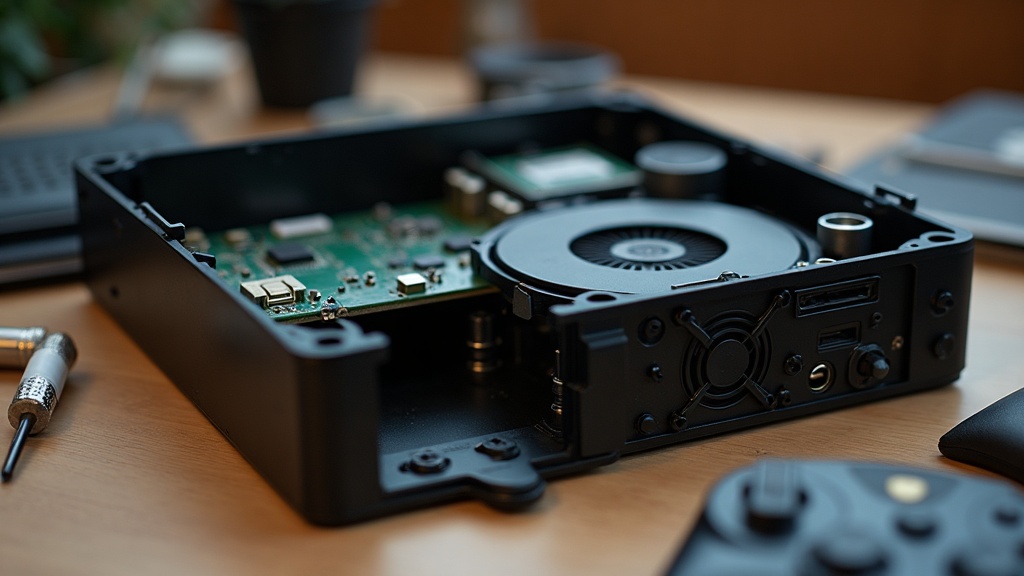
A revision typically keeps the same core hardware but refines how it’s built. That usually means a smaller chassis, better internal cooling, quieter fans, sometimes higher storage as standard, and manufacturing fixes for problems that showed up after millions of units shipped.
Revisions are not the same thing as a new console generation. A revision runs the same games at the same basic level of performance as the original model — it’s a manufacturing refinement, not a power upgrade. For a clearer breakdown of that distinction, see our explainer on console generation vs. console refresh.
Common things a revision improves:
- Physical size and weight, often through a redesigned internal layout
- Noise level, especially under heavy load during longer sessions
- Heat management, which can affect long-term reliability
- Port placement, cable routing, or controller charging setups
- Storage capacity included in the base package
§02Are launch consoles actually less reliable?
Launch hardware has historically had a higher chance of running into early production issues than hardware built a year or two later, once a manufacturer has had time to refine its assembly process. This isn’t true of every console, but it’s a recurring pattern across generations.
Early production runs are effectively the first mass-manufactured version of a brand-new design. Manufacturers test extensively before release, but real-world use across millions of living rooms, TV setups, and climates finds problems that lab testing sometimes misses. Cooling solutions get refined, disc drives get quieter, and components that ran hot in year one often run cooler in later revisions once the manufacturer has real field data to work from.
None of this means launch units are unreliable in some dramatic sense. Plenty of people buy on day one and never have a problem. It just means the odds shift slightly in favor of patience, and that shift tends to be more noticeable with a console’s first hardware design than with, say, a controller update alone.
§03Does waiting save real money?
Usually, yes, though the amount varies a lot by console and by how the manufacturer chooses to price things. The pattern tends to look like this: the launch price holds for a while, then a revision arrives that either drops price at the same storage tier or offers more storage for a similar price.
Rather than quoting specific figures that will be outdated quickly, it helps to think in terms of price tiers:
- Entry-level models usually appear later in a console’s life, often paired with lower storage.
- Standard/flagship models are what launch first, usually with the storage and features the manufacturer wants to lead with.
- Bundles at or after a revision often include a game or accessory that effectively lowers the cost per item, even if the console price alone hasn’t dropped.
If saving money is the main goal, tracking bundles around a revision’s arrival is usually more useful than watching for a straightforward price cut on the original model.
§04What do you actually lose by waiting?
The most obvious cost of waiting is time with games you want to play. If a console has exclusive titles you’re excited about, waiting a year or more for a revision means either missing that early window entirely or catching up later, possibly after spoilers, sequels, or community buzz have already passed.
There’s also a social dimension. Launch periods tend to have the most active online communities, the most discussion, and sometimes limited-run merchandise or collector’s editions tied to the console’s debut. None of that is essential to enjoying the hardware, but it’s part of what some players are actually buying into.
Finally, waiting means living with whatever you currently own for longer, which matters if your existing setup is already showing its age — a controller with worn sticks, a console running out of storage, or a TV that can’t take advantage of newer features.
§05How do you know if a revision is coming soon?
There’s no reliable public signal that guarantees a revision’s timing, and manufacturers don’t announce these plans in advance. The realistic approach is pattern recognition, not prediction.
Historically, most console makers have released some kind of hardware revision within the first few years of a console’s life, often more than once over a generation. That doesn’t mean a revision is guaranteed on any particular console, and it doesn’t mean one is imminent just because a console has been out for a while.
Practical signs worth paying attention to instead:
- Whether the current model has known common complaints (noise, size, a specific hardware quirk) that would be an obvious thing to fix
- Whether storage on the base model already feels tight for how large games have gotten, which is covered in more depth in our guide to how much console storage you actually need
- Whether the console’s price has stayed flat for an unusually long stretch, which sometimes precedes a refresh
None of these guarantee a revision is coming on any particular timeline. They’re just the kind of signals that have preceded revisions in the past.
§06Does a revision affect which games you can play?
No — a revision runs the same game library as the original model. The games themselves aren’t tied to which hardware revision you own, only to which console generation it belongs to. Any differences are about comfort and reliability, not compatibility.
Where hardware generation does matter is in bigger structural things: whether the console has fast internal storage that changes how games load (see our piece on what an SSD actually changes about game loading), and whether it supports current display standards like the ones covered in our explainer on HDMI 2.1 and whether it matters for gaming. Those are generation-level differences, not revision-level ones.
If you’re also upgrading your television around the same time as a console purchase, it’s worth reading whether you actually need a 4K set to take advantage of a modern console before spending on both at once.
§07Who should actually buy at launch?
Launch buyers are usually people for whom the wait itself has a real cost — not just impatience, but a genuine loss of enjoyment, community, or opportunity. That’s a legitimate reason to buy early, even knowing the tradeoffs.
Buying at launch makes the most sense if:
- There’s a specific game or franchise you want to play as soon as possible, and playing it later would meaningfully reduce your enjoyment
- You’re an active part of an online community built around that console and want to be part of the early conversation
- Your current setup has a genuine problem right now — failing hardware, worn-out controllers, or storage that’s actually full — and waiting means putting up with that for another year or more
- You’ve done some research into the specific console’s launch history and are comfortable with the risk profile
§08Who should wait for the revision?
Waiting suits players who are patient, price-sensitive, or simply not in a rush to play specific day-one titles. If none of your favorite franchises are launch exclusives, there’s little practical downside to letting the console mature for a year or two.
This is the more common recommendation for a simple reason: most of the risk in a launch purchase is downside risk (early hardware quirks, higher prices, lower storage) with the main upside being timing, not quality. If timing isn’t important to you, there’s not much reason to accept that risk.
Waiting is a particularly easy call if:
- You’re not attached to any specific launch-window game
- Your current console or setup still works fine
- You’d rather buy a bundle with a game or accessory included than pay full launch price for the console alone
- You’re comfortable reading up on a console’s early reputation before deciding, rather than buying sight unseen
§09Does the same logic apply to controllers and accessories?
Largely, yes. Controllers released alongside a launch console sometimes get quietly refined in later batches — better stick materials, revised triggers, small comfort tweaks — for the same reasons the console itself gets revised.
If controller longevity is a concern, it’s worth understanding how these devices wear out in the first place. Our guides on how game controllers actually track inputs and what controller drift is and why it happens both explain the mechanical reasons a controller can degrade over time, which is useful context whether you’re buying a launch controller or a later one.
§10The bottom line
There’s no universally correct answer, only a correct answer for a given player’s priorities. Launch buyers trade a small amount of risk and higher cost for being first. Revision buyers trade a bit of waiting for a cheaper, usually more refined product with the exact same games available to play.
Reading up on a specific console’s history — known issues, price movements, and what a rumored or confirmed revision is actually expected to change — is more useful than any general rule. For more on how to think through hardware purchases generally, our buying advice hub and consoles & hardware hub cover related decisions, from storage to displays to controllers, that tend to come up around the same time as this one.