A gaming headset’s main difference is the built-in microphone for voice chat, plus tuning aimed at hearing footsteps and gunfire clearly rather than making music sound balanced. Beyond that, many “gaming” features — like surround sound modes or RGB lighting — are marketing rather than a real technical advantage over good headphones.
§01What’s the single biggest difference?
The microphone. Almost every gaming headset ships with a boom mic attached to the headband, ready for party chat, Discord, or in-game voice communication. Regular headphones, even expensive audiophile ones, almost never include a microphone built in, because that isn’t what they’re designed for.
This sounds like a small thing, but it changes the whole use case. If someone wants to play online shooters, party games, or co-op titles with friends and talk while doing it, a separate desk microphone or lapel mic solves the same problem — but a gaming headset bundles it into one purchase and one cable (or one wireless connection).
§02Do gaming headsets actually sound different, or is it just marketing?
Gaming headsets are usually tuned to emphasize footsteps, voice cues, and directional detail rather than deep bass or smooth vocals. This makes competitive games easier to read by ear, but it can make music or movies sound thinner or less natural compared to headphones built for general listening.
Headphone manufacturers aiming at music listeners tend to chase a flatter, more balanced sound signature, or one that flatters bass and vocals. Headset manufacturers, especially ones aimed at competitive shooters, often boost the frequency ranges where footsteps, reloads, and other positional cues sit, sometimes at the expense of overall sound quality.
Neither approach is “better” in an absolute sense — it depends on what someone is using the headphones for most of the time. A person who mostly listens to music and occasionally games may prefer a good pair of general-purpose headphones. A person who plays a lot of competitive online shooters may prefer something tuned for footstep awareness, even if it makes their music playlist sound a little thinner.
§03Is “surround sound” on a headset real surround sound?
Most gaming headset surround sound is a virtual, software-based effect processed through drivers that are still just stereo speakers in each ear cup. It can genuinely help with directional awareness, but it is not the same as a home theater setup with multiple physical speakers.
Software-based virtual surround works by manipulating the timing and volume of a stereo signal to trick the brain into perceiving direction — a sound seeming to come from behind, above, or to one side. Done well, this genuinely helps players locate enemies in a game. Done poorly, it can just muddy the sound.
Some higher-end headphones support similar spatial audio processing through the console or PC’s software rather than the headphones themselves, which is part of why the line between “gaming” and “regular” headphones has blurred. The processing increasingly happens upstream, in the console or sound card, rather than being something only a gaming-branded headset can do.
§04What about wireless — does that matter more for gaming?
Wireless gaming headsets are usually built to prioritize low, consistent latency over other wireless features, using a dedicated USB dongle rather than standard Bluetooth. Regular wireless headphones optimize for battery life and general compatibility instead, which can introduce a small delay that matters less for music than for split-second gameplay.
That small delay barely matters when listening to a podcast or an album. It matters more in a fast-paced game, where hearing a sound cue late — even by a fraction of a second — can be the difference between reacting in time or not. This is one of the more genuine, non-marketing differences between the two categories, and it’s covered in more depth in the site’s breakdown of which peripherals are worth going wireless.
§05Are gaming headsets more comfortable for long sessions?
Many gaming headsets are designed around long sessions, with lighter clamping force, breathable ear cushions, and adjustable headbands meant for hours of continuous wear rather than an hour of listening. This is a genuine design difference, though comfort is still very personal and varies headset to headset.
- Ear cup padding materials — mesh fabric breathes better over long sessions than solid pleather, which tends to trap heat.
- Clamping force — a looser fit reduces pressure on the temples and glasses during multi-hour play.
- Weight distribution — some headsets balance weight across the headband so the ears aren’t bearing all the pressure.
None of these are exclusive to gaming headsets. A well-designed pair of general headphones can be just as comfortable, sometimes more so, especially at higher price tiers where materials and build quality improve. Comfort is closely tied to how someone sets up their whole play space, which is also worth thinking about alongside setting up a comfortable gaming desk.
§06Do headphones work fine for gaming without a headset?
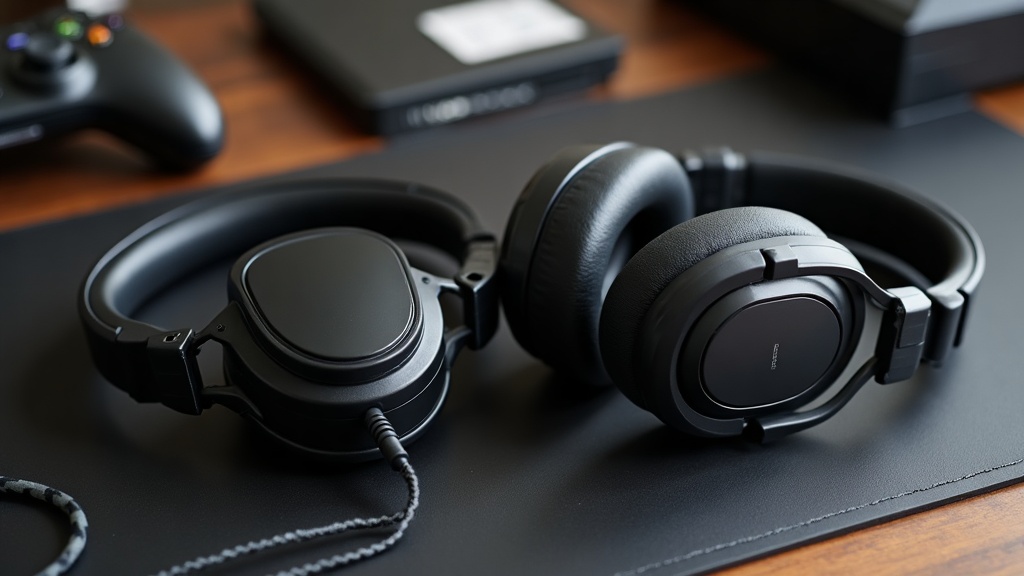
Yes. Any pair of headphones will work for gaming as long as they physically connect to the console or PC, whether through a headphone jack, USB, or Bluetooth. The main thing missing is a built-in microphone, which can be solved separately with a standalone mic or a controller-clip mic.
For single-player games, or for anyone who doesn’t need to talk during online play, regular headphones are often the better value. Someone already invested in a solid pair of music headphones doesn’t necessarily need to replace them just to start gaming — they might just need an adapter, a cheap clip-on microphone, or a console-specific accessory to add voice chat capability.
§07When does it make sense to buy a dedicated gaming headset instead?
A dedicated gaming headset makes the most sense for players who game online frequently, want voice chat built in without extra cables or accessories, and play competitive titles where directional audio cues genuinely affect performance. It’s less necessary for single-player, story-focused, or casual gaming.
- Frequent online multiplayer or party chat use, where a built-in mic saves buying a separate one.
- Competitive shooters or tactical games, where footstep and directional audio cues have real gameplay value.
- Long console or PC sessions, where a headset designed for extended comfort earns its keep.
- Wanting one simple all-in-one product rather than assembling headphones plus a separate microphone.
On the other hand, someone who mostly plays single-player games, watches a lot of movies or listens to music through the same device, or already owns headphones they like may get more value out of adding a cheap standalone microphone than replacing everything with a gaming-branded headset.
§08Does price tier actually change what a headset can do?
Higher price tiers generally buy better microphone clarity, more durable materials, and more accurate audio tuning — not necessarily “more features.” Entry-level headsets often copy the feature list of flagship models but with weaker execution, like a tinnier microphone or thinner ear cushion foam.
This mirrors a pattern seen across gaming hardware generally: paying more usually buys refinement of the same basic idea rather than a completely different one. The same logic that applies when choosing which PC parts matter most for the money applies to audio gear too — spending should track what actually gets used, not what looks impressive on a spec sheet.
It’s also worth remembering that a headset is one small piece of a much bigger setup. Anyone building out a gaming space from scratch may want to look at the broader picture in the site’s buying advice hub and the PC gaming setup hub, both of which cover how audio, displays, and peripherals fit together rather than treating each purchase in isolation.
§09So what’s the honest takeaway?
A gaming headset is essentially a pair of headphones with a microphone attached and the sound tuning aimed at gameplay cues instead of music balance. It’s a convenience product built for a specific use case — online, competitive, communication-heavy play — not a fundamentally different piece of audio technology.
For players who fit that use case, the built-in mic and tuning are genuinely useful. For players who don’t, a good pair of regular headphones, paired with a cheap microphone if needed, will often do the job just as well, and sometimes sound better while doing it. Choosing between the two is less about which is objectively superior and more about matching the gear to how someone actually plays. Readers weighing up their whole hardware lineup can find more comparisons like this across the consoles and hardware hub.