Video Game Sources // Field manual for people who play82 entries · 2026
Index / Video Game Sources Editorial Team

Why Do Game Reviews Disagree With Each Other So Much?

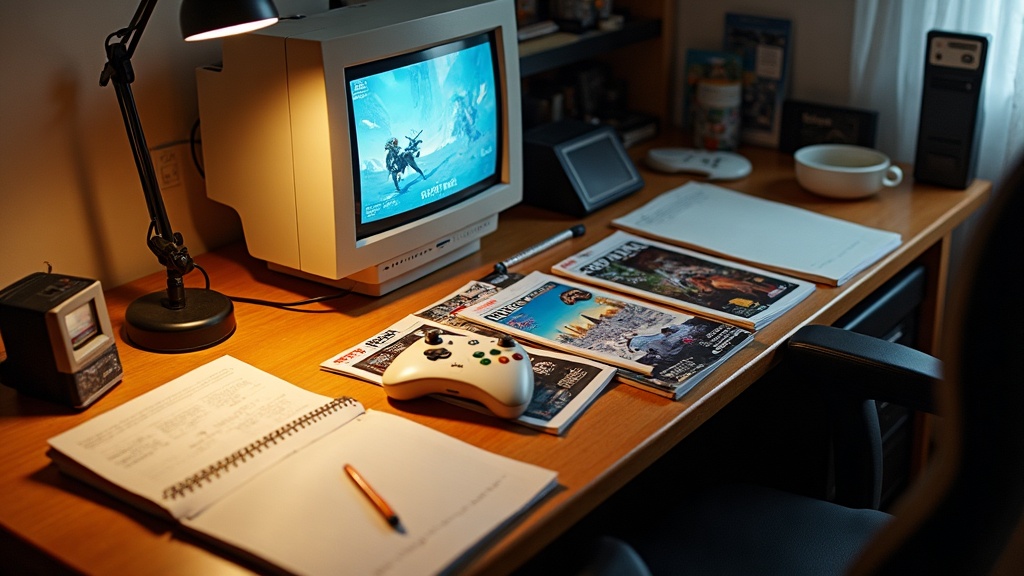
Stacks of game review notes and magazines spread on a desk illustrating why game reviews disagree so much

Game reviews disagree because reviewers are not measuring the same thing. Different critics weigh story, controls, difficulty, technical polish and personal taste differently, they play under different conditions, and they often review at different points in a game’s life — before patches, updates or price changes shift the experience entirely. Is there even an objective … Read more

What Is Crunch and Why Does It Keep Happening?

An empty developer desk late at night with glowing monitors, illustrating what crunch in game development looks like

Crunch is the industry term for extended, unpaid or under-compensated overtime that game developers work in the weeks or months before a game ships. It keeps happening because games are hard to estimate, deadlines are often fixed before the work is scoped, and the industry has few structural incentives to change that. What does “crunch” … Read more

Why Do Games Get Delayed? The Real Reasons Explained

A desk covered in schedule notes and a crossed-out calendar date, illustrating why games get delayed

Games get delayed because software is unpredictable to finish, and the last stretch of development — fixing bugs, balancing difficulty, passing platform certification, and polishing performance — always takes longer than anyone expects. A delay is usually a studio choosing to protect quality over a date they set months or years earlier. It happens across … Read more

Why Do Video Games Take So Long to Make?

A developer's desk with monitors showing level design and code, illustrating why video games take so long to make

Video games take so long because modern development means building enormous amounts of content, technology and testing simultaneously, then repeatedly redoing work as ideas change. Bigger teams, higher visual expectations, more platforms to support, and a growing focus on avoiding burnout all add years that older, smaller productions never needed. What actually takes up most … Read more

Port vs Emulation vs Remaster: What’s the Difference?

A workbench with an old game cartridge, a modern controller, and a CRT television illustrating the difference between a port, an emulation and a remaster

A port takes a game’s original code and adapts it to run on different hardware. Emulation uses software to imitate the original hardware so the unaltered game thinks it’s running on its native system. A remaster takes the existing game and improves its audio, visuals or performance without rebuilding it from scratch. All three preserve … Read more

Why Do Some Classic Games Never Get Re-Released?

A shelf of aging game cartridges and discs representing classic games that never get re-released

Some classic games never come back because the rights are split between multiple companies who can’t agree, the original source code is lost or unusable, the music or likenesses inside it were only ever licensed for a limited time, or nobody currently holding the rights sees enough money in bringing it back. Why can’t a … Read more

What Happens When a Game’s Servers Shut Down?

A server rack with most lights switched off, illustrating what happens when a game's servers shut down

When a game’s servers shut down, anything that depended on that server stops working. That can mean losing online multiplayer, matchmaking, leaderboards, cloud saves, or in-game stores. For games built entirely around a server connection, the whole game can become unplayable — even if the disc or download is still sitting on a hard drive. … Read more

VIDEO GAME SOURCESParts list · 82 entries
© 2026 Video Game Sources · Drawn not to scaleIndependent — we buy the hardware ourselves
About  ·  Contact  ·  Privacy Policy
© 2026 Video Game Sources