Some strategy games take hundreds of hours to learn because they aren’t really one game with one set of rules — they’re several interlocking systems (economy, diplomacy, combat, logistics) that all affect each other, plus interfaces built for information density rather than ease of entry. Mastery means understanding the whole web, not just one part of it.
§01What actually makes a strategy game “deep” instead of just complicated?
Depth means the decisions you make in one system genuinely change the best decisions in another. Complication just means there are a lot of menus. A deep strategy game ties its parts together so tightly that learning them one at a time doesn’t work — you have to hold several moving pieces in your head simultaneously.
In a grand strategy title, for example, your economy determines your military capacity, your military capacity determines your diplomatic leverage, and your diplomatic standing determines which economic policies are even available to you. Change one input early and the whole shape of a 40-hour campaign shifts. That’s a genuinely different kind of learning curve than, say, memorizing a horror game’s scare cues, which is covered in our piece on what makes horror games frightening beyond jump scares — that’s about reading tone, not juggling ten interconnected spreadsheets.
§02Why do these games front-load so much information instead of teaching gradually?
Many strategy games were built by small teams designing for an audience that already wanted density, so tutorials were treated as an afterthought bolted onto systems that were never simplified for newcomers. The result is a wall of terminology thrown at players before the systems have had time to make sense.
This is a real design failure, not an inevitable cost of depth. Plenty of strategy franchises have gotten noticeably better at pacing their information over time, introducing one system, letting players sit with it, then layering on the next. Others still dump every mechanic in the opening hour and expect players to piece it together from wikis and forum threads. Our article on what makes a good video game tutorial work goes into why so many genres, strategy included, struggle with this balance between honesty about complexity and not scaring people off in the first ten minutes.
§03Is the learning curve really about the rules, or is it the interface?
It’s frequently the interface. Strategy games often present information through small icons, nested menus, and nation-specific jargon that takes as long to decode visually as the underlying rule takes to understand conceptually. A clean interface can cut the effective learning time dramatically without changing a single game rule.
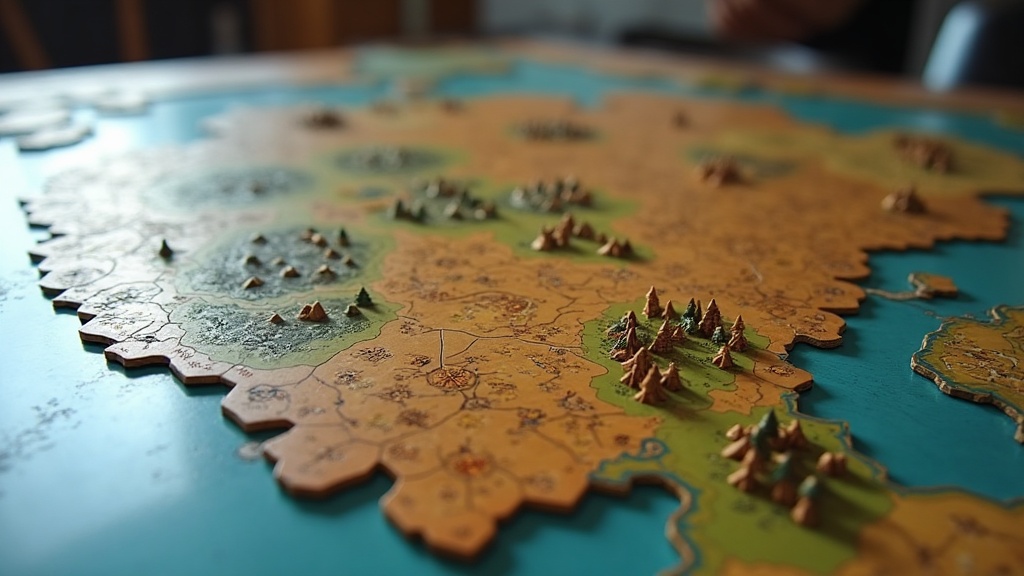
Consider how much of “learning” a strategy game is actually learning to read its map. Borders, resource icons, unit stacks, and trade routes are all crammed into the same screen, and until a player can parse that visual language at a glance, every turn takes far longer than it should. This is less about intelligence and more about pattern recognition built through repetition — the same way a chess player eventually stops consciously counting squares. It’s a genuinely different kind of friction than the interface problems covered in pieces about input lag and how to reduce it, where the issue is milliseconds rather than mental parsing, but both point to how much interface design shapes what a game feels like to learn.
§04Why don’t these games just get simpler over time, like other genres have?
Some do simplify, but the audience for the deepest strategy games actively resists simplification, because the complexity is part of what they’re paying for. A title that strips out systems to become more approachable risks alienating the core players who kept the series alive for years.
This creates a real tension for developers. Long-running series have to decide whether to reboot with a cleaner design or double down on the depth that built their reputation, a dilemma explored more broadly in our piece on why so many long-running game series reboot themselves. Strategy franchises tend to land on a middle path: keep the deep systems intact for veterans, but add optional advisors, tooltips, or simplified difficulty modes so new players aren’t dropped straight into the deep end. Whether that succeeds is genuinely debatable — some players find these aids helpful scaffolding, others find them a crutch that hides the real game underneath.
§05Does this kind of depth exist outside grand strategy games?
Yes. Any genre where systems interact rather than sit side by side tends to produce long learning curves. Deep tactical RPGs, city builders with layered infrastructure, and even some survival games share the same trait: no single mechanic is hard, but the combination takes time to internalize.
It’s worth comparing this to genres people assume are simpler on the surface. Survival games, discussed in our article on why survival games are so popular right now, often hide similarly deep crafting and resource webs behind an approachable exterior. The difference is presentation: survival games tend to reveal systems gradually through exploration, while strategy games often show you the entire rulebook on the main menu screen. Similarly, the distinction between a CRPG and an action RPG, covered in our CRPG versus action RPG explainer, comes down to a comparable trade-off between systemic depth and immediate accessibility.
§06Is there a genuine payoff for putting in hundreds of hours?
For players who enjoy this genre, yes — the payoff is the moment the whole system finally clicks and a campaign starts to feel less like following instructions and more like genuinely understanding cause and effect across dozens of variables. That feeling doesn’t arrive quickly, and it can’t be shortcut.
This is also why strategy games have unusually long tails compared to many other genres. A campaign that takes 40 hours to finish once might take 400 hours to actually master, because early playthroughs are mostly spent learning the interface and vocabulary rather than making meaningfully strategic choices. Once that foundation is in place, later playthroughs move faster and decisions get sharper. It’s a slow burn by design, closer in spirit to learning a real-world skill than to finishing a linear campaign.
§07Does hardware or platform affect how approachable these games are?
Somewhat. Strategy games with dense interfaces have historically favored mouse-and-keyboard setups because precise clicking and hotkeys speed up the interface-reading problem discussed earlier. Console versions exist, but players sometimes report the learning curve feels steeper without a mouse’s precision.
For anyone building or upgrading a setup specifically to play this kind of game comfortably, considerations like screen space and readability matter more than raw graphical horsepower. Our guides on whether an ultrawide monitor is good for gaming and how to set up a comfortable gaming desk are useful starting points if a dense strategy map is genuinely hard to read on a current display. More screen real estate doesn’t reduce the learning curve, but it does reduce the friction of simply seeing what’s happening.
§08Should a newcomer even attempt one of these games, or start elsewhere?
Starting elsewhere first is often the better move. Lighter strategy or tactics games, or genres with clearer feedback loops like roguelikes, can build the pattern-recognition muscles that make the eventual jump into a deep grand strategy title far less overwhelming.
Our explainer on what actually defines a roguelike covers a genre that rewards repeated attempts and gradually improving decision-making in shorter sessions, which is a gentler way to build the habits — reading systems, planning ahead, accepting setbacks — that make the heaviest strategy games click sooner. For readers who want a broader map of where different strategy and tactics titles sit on the depth spectrum before committing hundreds of hours to one, the genres and recommendations archive is a good place to browse before choosing where to start. For those curious about how strategy design has changed generation to generation, the game history archive traces how these systems evolved from simpler beginnings into the sprawling, hundred-hour experiences many strategy fans enjoy today.