A CRPG (computer role-playing game) resolves actions through underlying stats, dice-like rolls, and menus, with combat often paused or turn-based. An action RPG resolves actions through real-time reflexes — aiming, dodging, timing — even though stats still exist underneath. The difference is really about what your hands are doing at the moment of decision.
§01What does CRPG actually stand for?
CRPG stands for “computer role-playing game,” a term that stuck around specifically to describe RPGs built for PC that trace their lineage back to tabletop systems like Dungeons & Dragons. The label isn’t about graphics or setting — it’s a shorthand for a design philosophy where numbers, not reflexes, decide outcomes.
In a CRPG, your character’s strength score, to-hit chance, or spell save matters more than how fast you can move a mouse. Combat is frequently turn-based or pausable, letting you queue up actions and think through a fight like a puzzle. Dialogue trees, skill checks, and branching consequences tend to be deep and text-heavy, because the genre grew up alongside tabletop role-playing and early text adventures rather than arcade cabinets.
Classic touchstones include the Gold Box games, the Baldur’s Gate series, and later entries like Pillars of Eternity and Divinity: Original Sin. More recent examples have leaned even further into reactive writing and systemic choice, but the throughline is the same: you’re playing a character sheet as much as a person.
§02What makes a game an action RPG instead?
An action RPG is a role-playing game where combat plays out in real time and success depends on player skill — timing a dodge, landing a combo, aiming a shot — not just the stats attached to your gear or level. The RPG systems (leveling, loot, skill trees) still exist, but they sit underneath action-game reflexes rather than replacing them.
This is the tradition that runs from Diablo’s click-to-kill loot loops through the Souls-style games’ stamina-managed dueling, up to open-world action RPGs where exploration and combat blend into a single continuous movement. Character builds still matter enormously — a poorly built character in an action RPG can absolutely lose a fight a well-built one would win — but the moment-to-moment execution is physical, not statistical.
It’s also worth noting that “action RPG” is a broad umbrella. A twitchy hack-and-slash and a slower, more deliberate melee game with heavy stamina management are both action RPGs, even though they feel very different to play. The unifying thread is simply that your reflexes are part of the resolution system, not just your build.
§03Is combat pacing the only difference?
No — combat pacing is the most visible difference, but the genres also tend to diverge on how much the game pauses to let you think, and how central branching dialogue and consequence-driven storytelling are to the experience.
- Combat resolution: Turn-based or pausable tactical combat versus real-time execution.
- Pacing of decisions: CRPGs often let you stop and deliberate mid-fight; action RPGs demand decisions in the moment.
- Weight of dialogue and choice: CRPGs frequently build entire systems around skill checks, reputation, and branching narrative outcomes. Action RPGs can include this too, but it’s usually lighter, layered on top of the combat loop rather than being the spine of the game.
- Party structure: Many CRPGs let you control a full party of characters simultaneously; action RPGs more often put you in direct control of a single character, even if companions tag along.
None of these lines are absolute, which is exactly why the debate keeps coming back.
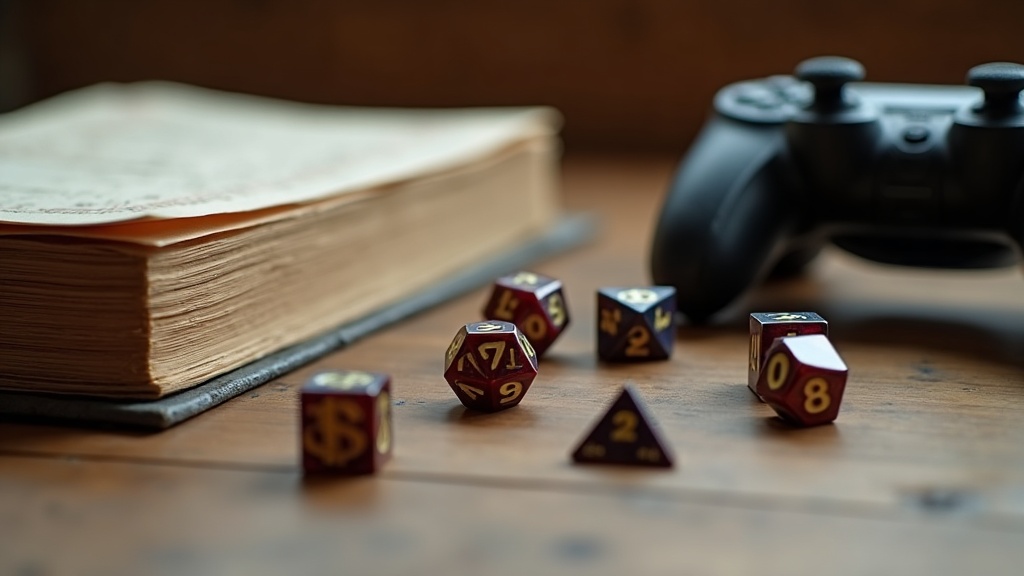
§04Why do some games blur the line between the two?
Games blur the line because “CRPG” and “action RPG” describe design tendencies, not fixed rulebooks, and many developers deliberately mix elements from both traditions to serve a particular kind of game.
A game can have real-time movement but pause completely for tactical positioning during combat — a hybrid sometimes called “real-time with pause.” Other games keep turn-based combat but strip out almost all the dialogue-tree, choice-driven storytelling that CRPG fans associate with the genre, functioning more like a tactics game with an RPG skin. And plenty of action-heavy games borrow CRPG-style skill checks and branching quest outcomes without ever slowing combat down.
This is similar to how genre boundaries get fuzzy elsewhere — the way a Metroidvania is defined more by structure than any strict checklist, or how what actually defines a roguelike has become its own long-running argument among players. RPG subgenres work the same way: useful shorthand, not hard science.
§05Does one genre demand a different setup to play well?
Not fundamentally, but each genre tends to reward different hardware priorities. CRPGs lean on precise mouse-and-keyboard input for menus and tactical positioning, while action RPGs often benefit more from a controller and a display that keeps up with fast, twitchy combat.
CRPGs are usually forgiving of older or modest hardware — they’re rarely graphically demanding, and their systems don’t punish a slightly lower frame rate the way a reflex-driven fight does. Action RPGs, especially ones with tight dodge windows or fast enemy attacks, benefit far more from a responsive setup. If input feels sluggish in a game where timing is everything, it’s worth checking what input lag is and how to reduce it, and readers building a machine specifically for these genres may want a general primer on what gaming PC parts matter most for the money before spending on anything flashy.
Screen choice matters differently too. A CRPG with dense text and inventory grids can genuinely benefit from a wider field of view, which is part of why some players ask whether an ultrawide monitor is good for gaming. Action RPG players chasing smoother combat feedback are more likely to care about what refresh rate is worth paying for on a monitor.
§06Which one should a new player try first?
There’s no universally correct starting point — it depends on whether a player enjoys reading and planning or reacting and executing. Someone who likes slow, deliberate tactical puzzles will get more out of a CRPG; someone who wants immediate feedback from combat will likely prefer an action RPG.
Players coming from strategy games, tabletop role-playing, or narrative-heavy adventures tend to settle into CRPGs comfortably, since the pacing and decision-making feel familiar. Players coming from platformers, shooters, or Souls-style games generally find action RPGs feel like a natural extension of skills they already have.
It’s also worth remembering that both genres have a long, tangled history worth exploring on their own terms — the kind of lineage covered more broadly in our Game History archive — and neither one is “harder” or “more legitimate” than the other. They’re just different answers to the same question: how should a role-playing game decide what happens when you act?
§07What’s the simplest way to remember the difference?
If you’re rolling the dice in your head and menus, it’s a CRPG. If you’re rolling the dice with your thumbs in real time, it’s an action RPG. Everything else — party size, tone, setting, art style — is decoration on top of that one structural choice.
For readers who want to keep exploring genre definitions with the same level of scrutiny, our Genres & Recommendations hub covers similar boundary-drawing exercises across other corners of gaming, and our Buying Advice section is a useful next stop for anyone deciding which kind of RPG — and which setup — is actually worth the money.